
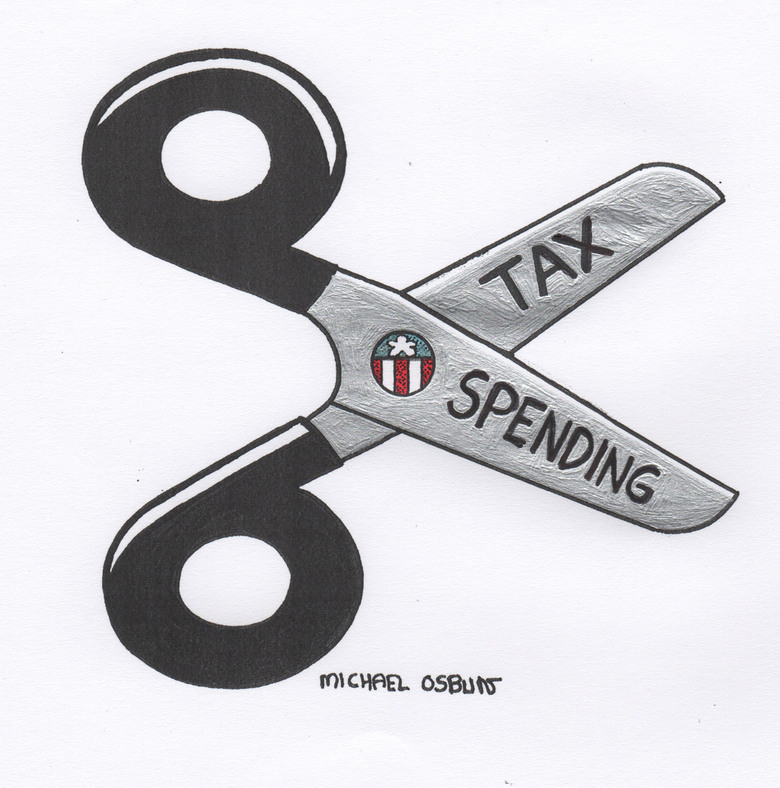
In defense of tax advisory votes
The whining and gnashing of teeth by politicians about this year’s 5 tax advisory votes is certainly entertaining (the Legislature imposed 5 tax increases which will cost the taxpayers $887 million — and so on the November ballot are Advisory Votes #3, #4, #5, #6 and #7 on those 5 tax increases — voters are being asked on each one: Should this tax increase be “Repealed” or “Maintained”).
But their complaints are also highly hypocritical.
Politicians always say “I’m proud of my record” and “I stand by my record.” Politicians always say they welcome public input, public feedback, and public involvement. They conduct “listening tours” and stage “town hall meetings” and hold “public hearings” (all of which are held in Olympia on weekdays while taxpayers are at work). But each of them has a fatal flaw: a miniscule, unrepresentative sample of citizens are heard from.
With tax advisory votes, every voter has a voice and every voter will be heard. It’s not a manipulated subset of the electorate that gets to speak, it’s everyone. That’s why politicians are freaking out.
THE GENESIS OF TAX ADVISORY VOTES: Politicians have become masters at denying the people’s constitutionally guaranteed right to referendum, especially on tax increases. In 2003 and 2005, the Legislature imposed massive tax increases and didn’t want the voters to second-guess their unilateral decisions. So they slapped emergency clauses on their bills and immediately bonded the new tax revenue to make those taxes “referendum proof.” The people have a constitutionally guaranteed right to collect signatures and force a vote on bills passed by the Legislature — it’s called a referendum. But the Legislature and the courts have effectively obliterated that constitutional right. So in 2007, we crafted an alternative that guarantees a vote even when they play their games: tax advisory votes. Not coincidentally, the biggest tax increase passed in the 2013 legislative session had an emergency clause attached, meaning the Legislature purposely vitiated the people’s right to referendum … again. But thanks to voters approval of I-960 in 2007 and I-1185 in 2012, the voters get the vote on it and the other tax increases unilaterally imposed by this year’s Legislature (their 5 tax increases will cost .
POLITICIANS WHINE THAT TAX ADVISORY VOTES ARE TOO EXPENSIVE: Tax advisory votes only appear on the ballot when the Legislature raises taxes without letting the voters have a voice. If they don’t like the expense of advisory votes, they can avoid them by not raising the tax or referring the tax increase to the ballot. In the case of the 2013 legislature, they raised 5 taxes that the state budget office confirms will cost the taxpayers $887 million in the first 10 years. And the extra pages in the voters pamphlet listing the tax increases’ costs and how legislators voted on them will cost $140,000. So they imposed $887 million in higher taxes and their boo-hooing over $140,000? That’s .02% of the taxes they raised being used to inform the voters and give them a chance to express their opinion.
POLITICIANS WHINE THAT TAX ADVISORY VOTES DON’T PROVIDE ENOUGH INFORMATION: If it was up to them, there’d be nothing about these 5 tax increases in the voters pamphlet. If they had their way, no one would get to vote. At least with tax advisory votes, the voters learn which taxes were raised, how much they’ll cost, and how legislators voted, and legislators’ contact information. And most importantly, voters get the chance to vote on the tax increases.
The voters approved of this policy in 2007. The voters renewed this policy in 2012.
Politicians aren’t happy about being second-guessed. Politicians aren’t happy about having their tax votes appear in the voters pamphlet. But tax advisory votes weren’t created to make politicians happy — they were created to hold politicians accountable through greater transparency and public disclosure. They were created to correct a gross injustice: the obliteration of the people’s constitutionally guaranteed right to referendum.
We wish they hadn’t raised taxes at all; then there wouldn’t have been any advisory votes. But given the fact that they did raise taxes at least the voters can have a say and know how their legislators voted on these five tax increases.
Our focus continues to be on “LET THE VOTERS DECIDE ON A 2/3-FOR-TAXES CONSTITUTIONAL AMENDMENT.” But it’s important for everyone to know the reasoning and rationale for the 5 tax advisory votes on the November ballot.